
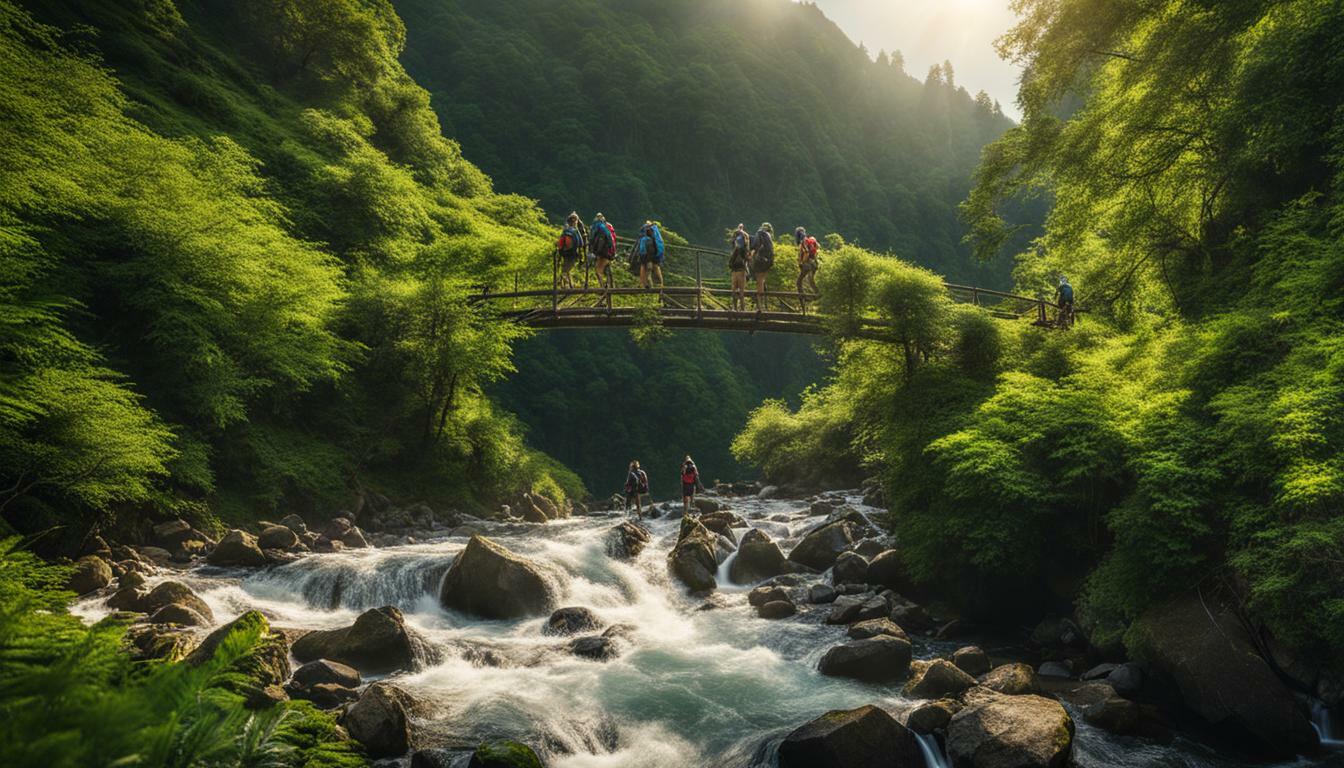
The Carpathian Mountains in Transylvania, Romania, are the country’s main hiking destination, with trails running from easy paths to ridge walks between towering cliffs and deep canyons. Use this page to pick a range, a season, and a route that matches your fitness.
Routes run from short forest walks to long ridge days, and the landscapes vary widely — peaks and valleys, cliffs, and canyons — rather than one kind of walk. The main ranges, a sample week-long itinerary, and the planning that matters are below.
Key Takeaways:
- The Carpathian Mountains in Transylvania, Romania are the country's main hiking ground, with trail clusters near Brasov.
- Routes range from a short forest walk to the rugged ridge of Piatra Craiului, so match the trail to your fitness.
- Brown bears, wolves, lynx, and chamois still live here, which changes how you plan a day on the trail.
- The hiking trails suit every level; the main hiking season runs June to October.
- Use Brasov as a base: Piatra Craiului, Bucegi, and Postavaru are all within a short transfer.
The Carpathian range at a glance
The Carpathian Mountains cross six countries in Eastern Europe, and Romania holds the largest portion of the range. The hiking trails and national parks in Transylvania are what most visitors come to use.
The range holds a lot of natural beauty in a small area — peaks and deep canyons, serene glacial lakes, and old forest — so one trip can string together very different walks.
The Carpathians still hold brown bears, wolves, lynx, and chamois. The national parks inside the range protect the habitat that keeps them there, which is why sightings, or at least tracks, are a real possibility on a day hike.
Romania's Carpathian Mountains keep hiking trails for every level, from a short walk out of Brasov to a long ridge day on Piatra Craiului. The work is choosing one that fits your fitness and the season.
National parks and where the trails run
A handful of national parks hold the best trail networks. They protect the ecosystems and keep the core hiking areas inside one set of boundaries. The main ones in Romania's Carpathian Mountains:
| National Park | Location |
|---|---|
| Piatra Craiului National Park | Located near Brasov, this park is renowned for its narrow and saw-like ridge, offering breathtaking views and challenging hiking trails. |
| Bucegi Natural Park | Considered Romania’s best-kept secret, Bucegi Natural Park rivals the beauty of the Alps and Tatra Mountains. It features stunning glaciers, canyons, and caves. |
| Retezat National Park | Known for its pristine glacial lakes and diverse wildlife, Retezat National Park offers a range of hiking trails for all skill levels. |
The parks are where the route-planning happens. A ridge day on Piatra Craiului and a lake-to-lake walk among the glacial lakes of Retezat ask for different fitness and gear, so pick the park before you pick the trail.
On the trail you move between peaks and dense forest with little development around you. That quiet is part of the draw, and part of why planning matters.
With thin infrastructure in places and breathtaking trails that earn the trip, the Carpathians in Romania reward planning more than most hiking destinations.
Highlights near Brasov
The highlights cluster near Brasov: the Piatra Craiului mountains, Bucegi Natural Park, the city of Brasov itself, and Bran Castle. You can reach all four on short transfers from the same base.
| Highlight | Description |
|---|---|
| Piatra Craiului Mountains | The Piatra Craiului mountains are considered one of the most beautiful in the Carpathian Mountains range. With its narrow and saw-like ridge, it offers breathtaking views and a challenging hiking experience. |
| Bucegi Natural Park | Romania’s best-kept secret, Bucegi Natural Park rivals the Tatra Mountains in Slovakia and the Alps when it comes to trekking. It boasts glaciers, canyons, caves, and lakes, offering a wealth of natural beauty, history, and adventure. |
| Brasov | Located in the Carpathian Mountains, Brasov is a historic city with a rich cultural heritage. It is known for its well-preserved medieval architecture, including remnants of a citadel built in 1553. The city offers a charming and picturesque setting for visitors to explore. |
| Bran Castle | No visit to the Carpathian Mountains in Transylvania would be complete without a visit to Bran Castle. Popularly known as Dracula’s Castle, it is a famous landmark with towers, narrow corridors, and hidden premises that incite mystery and intrigue. |
Piatra Craiului
Piatra Craiului runs as a narrow, saw-tooth limestone ridge, and that shape is what makes the range memorable. The ridge gives panoramic views over the surrounding valleys, and the national park holds a lot of the range's biodiversity.
“The Piatra Craiului mountains are considered one of the most beautiful in the Carpathian Mountains range.”
Bucegi Natural Park
Bucegi Natural Park sits above Brasov and is often compared with the Tatra Mountains and the Alps. The park stacks several landscapes into one area — glaciers, canyons, caves, and lakes — which is why it works for a single long day or several shorter ones.
Brasov
Brasov sits inside the Carpathians and makes a practical base for these ranges. The citadel remnants, the Black Church, and the town square are all within a short walk of each other.
Bran Castle
Bran Castle is widely known as Dracula's Castle and draws heavy crowds. The towers, narrow corridors, and hidden rooms are the reason to go inside; the connection between the castle and the Dracula legend is thinner than the souvenir stalls suggest.
Itinerary for Hiking the Carpathian Mountains
This is a sample week that strings together the Piatra Mare mountains, a trekking crossing of Piatra Craiului National Park, nights in Magura village and around Curmatura chalet, a stop in Zarnesti town, and a day in Bucegi Natural Park.
It is usually run with a guide, but you can use it as a template for your own route.
Day 1: Piatra Mare Mountains – 7 Ladders Canyon
| Hiking Time | Uphill/Downhill | Distance | |
|---|---|---|---|
| Itinerary | 7-8 hours | 800m/800m | 16 km |
Start in the nearby Piatra Mare (Big Stone) mountains. Hike to Piatre Mare chalet (1628m), then climb to the range's highest peak, Mount Piatre Mare (1843m). Descend through the “7 ladders canyon” past several waterfalls and high rock walls. Transfer back to Brasov.
Day 2: Piatra Craiului National Park – Magura Village
| Hiking Time | Uphill/Downhill | Distance | |
|---|---|---|---|
| Itinerary | About 4 hours | 400m/400m | 9 km |
Transfer from Brasov to Bran town to start Piatra Craiului National Park. An optional morning stop is Bran Castle. Hike from Bran to Magura village on trails and dirt roads through forest, meadows, and open countryside. Overnight in a guesthouse in Magura Village.
Day 3: Magura Village – Curmatura Chalet – Zarnesti Town – Magura Village
| Hiking Time | Uphill/Downhill | Approximate Distance | |
|---|---|---|---|
| Itinerary | 7-8 hours | 500m/700m | 20 km |
This day crosses the heart of Piatra Craiului National Park. Hike from Magura Village to Curmatura chalet (1470m) for a lunch break, continue to Zarnesti town — the main gate to the park — then descend back to Magura village. Overnight in Magura Village.
Day 4: Magura Village – Bucegi Natural Park – Brasov
| Hiking Time | Uphill/Downhill | Approximate Distance | |
|---|---|---|---|
| Itinerary | 5-7 hours | 800m/800m | 14 km |
After breakfast, transfer to the start point in Bucegi Natural Park. Walk a wide forest road through meadows and take a lunch break there. A sheep farm along the way sells local cheese. An optional detour leads to the Evil Waterfall. Transfer back to Brasov for the night.
Day 5: Rest Day – Brasov – Tampa Mountain – Brasov
| Hiking Time | Uphill/Downhill | Approximate Distance | |
|---|---|---|---|
| Itinerary | 2-3 hours | 400m/400m | 6 km |
A rest day with a short hike on Tampa Mountain (960m). The summit gives a wide view over Brasov. Take the cable car up and walk down, or the reverse. An optional guided Brasov walking tour runs in the evening.
Day 6: Poiana Brasov Resort – Postavaru Mountains – Brasov
| Hiking Time | Uphill/Downhill | Approximate Distance | |
|---|---|---|---|
| Itinerary | 4-5 hours | 700m/700m | 10 km |
Transfer to Poiana Brasov resort, Romania's main ski resort. Trek to the top of the Postavaru Mountains (1799m) and descend back to the resort on easy forest paths through meadows. The cable car is optional in either direction. Transfer back to Brasov.
Day 7: Departure
Transfer to Bucharest for departure.
Good to know:
• How the tour runs: You will be met at the airport by our local supporting agent and transferred to Brasov. After accommodation, you will have an info meeting to discuss all details regarding the trek and receive your maps and route notes.
• “7 Ladders Canyon” is closed on Mondays and during severe weather conditions.
• Routes and waymarks: You will follow well-marked trails that are part of the Carpathian hiking network.
• Terrain: The hiking paths mainly consist of forests, meadows, dirt roads, and gradual elevation gains. The “7 ladders canyon” involves walking on steel ladders and bridges in a narrow and spectacular gorge.
• The tour can be organized for a minimum of 2 people. Please inquire for larger group quotes.
Necessary Equipment:
- Daypack (20-30l)
- Hiking shoes
- Breathable clothes
- Waterproof gear
- Headlamp or torch
- Sunglasses
- Compass
- And more
Best Time to Hike in the Carpathian Mountains: June – October
Price Includes: accommodation in pensions/guesthouses with private facilities, meal plan: all days on BB (breakfast included), maps and route notes, all transfers per itinerary including transfers to the airport, luggage transportation, guided tour of Brasov by night, 24/7 emergency hotline.
Not Included: flight tickets, lunches and dinners, drinks, entrance fees, lift tickets, transfers different than mentioned in the program, insurance, personal expenses, tips.
Additional Services: entrance fees for “7 Ladders Canyon” +10 lei/pp (about 2.5 EUR) and Piatra Craiului National Park +5 lei/pp (about 1 EUR), additional accommodation upon request, price for bigger groups upon request.
Planning and preparation
A safe hike here comes down to four things: reading the terrain, following the waymarks, knowing how thin the hiking infrastructure is, and deciding whether to hire licensed guides.
Terrain
The terrain in the Carpathians shifts between narrow ridges, deep canyons, dense forest, and rocky peaks. Read the route you plan to hike before you go, so you know the difficulty and the ground you'll cross, and can prepare for both.
Waymarks
The trail network is well marked with waymarks — coloured stripes, triangles, circles, and a few other symbols. Learn what they mean before you rely on them. Carry a map or an app such as Munţii Noştri as a backup.
Hiking infrastructure
Infrastructure is thin on parts of the range. Accommodation, food, and water can be limited or absent along some routes, so plan the day around where the next stop actually is and carry what the gap requires.
Licensed guides
If you don't know the range or haven't hiked rugged ground before, a licensed guide is worth the cost. Licensed guides know the area, are trained in outdoor safety, and keep you on the right trail through the harder sections.
“Hiking in the Romanian Carpathians is not easy because of our underdeveloped tourist infrastructure, wilderness, and the risk of running into brown bears! And that’s besides the usual risks of going in the mountains… Which makes it even more exciting – with proper planning!”
“We found Brașov to be a great home base to explore this part of Transylvania. It’s close to these mountains and the town itself is incredibly charming. Plus, we lucked out with an amazing Airbnb overlooking one of the main pedestrian streets of the historic old town.”
Plan ahead: read the terrain, follow the waymarks, plan around the hiking infrastructure, and decide whether you need licensed guides. That is most of what keeps a Carpathian hike safe.
Wildlife and natural attractions
Beyond the trails, the range has natural attractions worth a detour: wildlife tours for bears and wolves, glacial lakes, the Sphinx rock formation, and the Zarnesti Gorges.
| Glacial Lakes | Sphinx Rock Formation | Zarnesti Gorges |
|---|---|---|
| Experience the beauty of the glacial lakes that dot the Carpathian Mountains. These stunning bodies of water are nestled amidst the picturesque landscapes and offer a tranquil and serene atmosphere. | Marvel at the iconic Sphinx rock formation, a natural wonder that resembles the famous Egyptian Sphinx. This unique rock formation is a popular attraction and offers a breathtaking view of the surrounding mountains. | Explore the awe-inspiring Zarnesti Gorges, a natural wonder that features towering cliffs, cascading waterfalls, and winding trails. This enchanting gorge is a paradise for hikers and nature lovers. |
Wildlife tours
The range holds brown bears, wolves, lynx, and eagles, and wildlife tours are the realistic way to see them. Guides know where the animals move and keep the encounter safe for both sides.
“The Carpathian Mountains offer a unique opportunity to witness the beauty of nature and the incredible wildlife that call this region home.” – Nature Enthusiast
These wildlife tours are led by guides who know the area and the animals' habits. That knowledge is what makes a sighting likely rather than a lucky walk.
Glacial lakes
- Several glacial lakes sit in the range, including Lake Balea and Lake Bucura, both reached by marked trails.
- The shores are flat enough for a short walk, which is the easiest way to see the lakes without a long climb.
- Still mornings give the clearest reflections of the surrounding peaks on the water.
- A picnic works, but carry out everything — there are no facilities at most of these lakes.
Sphinx rock formation
- The Sphinx rock formation sits on the Bucegi Mountains plateau and takes its name from a shape that resembles the Egyptian Sphinx.
- The viewpoint next to it looks out over a wide stretch of the Carpathians.
- A guide can explain the geology, but the formation is easy to reach and read on your own.
- The rock reads best in side light, so time the photo for early or late in the day.
Zarnesti Gorges
- The Zarnesti Gorges run between high cliffs with rock formations and waterfalls, and the path through them is one of the easiest big-scenery walks in the area.
- The trail winds through the gorge and opens to a new view at each bend.
- Wooden bridges and narrow sections cross the stream, so expect wet footing in places.
- The damp, rocky walls hold plant species you won't see on the open ridges above.
The glacial lakes, the Sphinx, and the Zarnesti Gorges all sit within reach of the same Brasov base. Take a wildlife tour or visit these natural attractions on your own — both work, as long as you plan the transfers.
Popular hiking trails by range
The main hiking ranges are the Fagaras Mountains, the Bucegi Mountains, the Piatra Craiului Mountains, the Apuseni Mountains, and Retezat Natural Park. Each suits a different trip, so the choice is as much about time and fitness as about scenery.
Fagaras Mountains
The Fagaras Mountains are Romania's highest range, with peaks over 2,500 meters including Moldoveanu Peak, the country's high point. The trails are long and exposed, which suits experienced hikers with a full day and a weather window.
Bucegi Mountains
The Bucegi Mountains sit above Brasov and mix alpine meadows with rock formations like the Sphinx and Babele on the plateau. Trails are well marked and the terrain varies, so the range works for half-day walks as well as full circuits.
Piatra Craiului Mountains
Piatra Craiului, near Brasov, is often called the “Transylvanian Alps” for its limestone ridge. The narrow, saw-like ridge is the range's signature and one of the best-known in the Carpathians. Trails run from moderate to challenging, with the ridge itself reserved for confident hikers.
Apuseni Mountains
The Apuseni Mountains, the “Western Carpathians,” are gentler than the southern ranges and known for caves and karst. Trails in the Apuseni Mountains pass through villages, forest, and valleys, which suits walkers who want scenery without a hard climb.
Retezat Natural Park
Retezat Natural Park is a national park in the Southern Carpathians, known for its glacial lakes and rugged peaks, and for a mix of rare and endemic plants and animals. Trails in Retezat Natural Park cross quiet landscapes and pass several of the park's natural attractions, which makes it a strong choice for a slower, wildlife-focused trip. Read more on the Retezat Natural Park guide.
Pick the range that fits your time and fitness, not the one with the most superlatives. Each of these has a different character, and a week in the Carpathians usually covers one or two of them well.
When to go
When you go matters more than where, on a short trip. The hiking season, the weather conditions, and the month you pick change which trails are open and what you need to carry for a memorable experience.
Hiking season
The hiking season runs from June to October, when temperatures are milder and rain is less likely. July and August bring the longest days and the most predictable weather, which is why they're the busiest months on the trails.
Weather conditions
Summer is generally pleasant, but temperatures vary at higher elevations. Rain and wind are normal, and the weather conditions change fast — bring layers and a shell, not just a base layer.
The range can turn quickly, so check the forecast the morning you set out and again at lunch. If a storm builds, change the plan — the ridge will still be there tomorrow.
Picking your month
The optimal time depends on what you want from the hike more than on a single best month. A few ways to choose:
- For milder weather and fewer people, go in June or September. The trails are quieter and the heat is lower.
- For the longest days and warmest weather, pick July or August. You get more daylight for long routes, but the popular trails are busier.
- If you have one trail in mind, check when it’s at its best — some are easier or more scenic in a specific season, such as when the wildflowers are out.
The right month is the one that matches your fitness and the routes you want. Whatever you pick, bring the right gear and a plan for changing weather.
Culture and history on the route
The route through the Carpathians also takes in Bran Castle, traditional villages, and historical landmarks that hold the region's story. The cultural heritage here is the reason to spend a day off the trail, not just on it.
Several historical landmarks sit in the range. Bran Castle, often tied to the Dracula legend, is the best known: a medieval castle with towers, narrow corridors, and hidden rooms, and a stop that earns its place for history more than for vampire folklore.
Beyond the castle, traditional villages such as Magura hold onto the cultural heritage of the area — older architecture, crafts, and a slower rhythm. They are a useful place to stop and a good base for a walking day.
“The Carpathian Mountains are not only known for their rugged beauty and breathtaking trails but also for their rich cultural heritage and historical significance.”
Brasov adds more historical landmarks: remnants of a citadel built in 1553, and the Black Church, the largest Gothic church between Vienna and Istanbul. The city is quieter than Bucharest, which is part of why it works as a walking base.
A day or two off the trail covers Bran Castle, the traditional villages, and the landmarks in Brasov. Pairing them with the hikes is what makes the trip a memorable experience rather than a single-purpose walking holiday.
| Key Cultural and Historical Highlights in the Carpathian Mountains |
|---|
| Bran Castle |
| Traditional Villages |
| Remnants of a Citadel in Brasov |
| The Black Church |
Practical tips
A short set of practical tips for hiking here: travel advice, the necessary equipment, and hiking tips specific to Romania and the Carpathians.
Travel tips
A few travel tips for planning the trip:
- Read the route and trail notes before you set out, not on the trailhead.
- Check the forecast the morning of the hike and pack for it to change.
- Tell someone your route and when you expect to be back.
- Carry a map and compass and know how to use them.
- Stay on marked trails and follow park authority instructions.
Necessary equipment
Essential equipment for a Carpathian day hike:
- A sturdy backpack to carry your supplies
- Comfortable and supportive hiking boots
- Layered clothing to adjust to changing temperatures
- A waterproof and windproof jacket
- A hat, sunglasses, and sunscreen for sun protection
- A headlamp or flashlight with extra batteries
- A first aid kit with essential medical supplies
- A water bottle or hydration pack
- A map and compass
- A whistle for emergency signaling
Hiking tips
A few hiking tips specific to Romania and the Carpathians:
- Stay on marked trails and leave the environment as you found it.
- Bears live here — take the standard precautions to avoid an encounter.
- Carry enough water and snacks for the day, not just the outward leg.
- Rest when you need to, especially on the longer routes.
- Follow Leave No Trace: carry out everything you carry in.
- Keep your distance from other hikers on narrow paths.
- Observe safety warnings and regulations from the park authorities.
“Hiking the Romanian Carpathians is a unique and rewarding experience. The rugged beauty and breathtaking trails offer a memorable adventure for outdoor enthusiasts.” – Romanian Friend
The Carpathians ask for more planning than a marked trail in a busy national park elsewhere. With these tips and the right kit, the rest is reading the weather and the route.
Hiking in the Carpathian Mountains in Transylvania, Romania
A quick summary of the points above, for readers who skipped to the end. The Carpathians in Transylvania are Romania's main hiking ground, with trails from short walks to long ridge days and a season that runs roughly June to October.
The range
The Carpathians cross six countries, and Romania holds the largest share. The Transylvanian section packs peaks, glacial lakes, and the busiest trail networks into one reachable area.
Highlights of the Carpathian Mountains in Transylvania
The highlights cluster near Brasov: the saw-tooth ridge of Piatra Craiului, the mixed landscapes of Bucegi Natural Park, the city of Brasov, and Bran Castle.
Itinerary for Hiking in the Carpathian Mountains
A sample week strings together day hikes in the Piatra Mare mountains and the “7 ladders canyon,” a trekking crossing of Piatra Craiului National Park with stops at Magura village and Curmatura chalet, a day in Zarnesti town and Bucegi Natural Park, a rest day in Brasov, and a final trek up the Postavaru Mountains from Poiana Brasov resort.
Planning and Preparation for Hiking in the Carpathian Mountains
Before you go: read the terrain, learn the waymarks, and plan around the hiking infrastructure. Good hiking preparation means the right necessary equipment and a read on the weather, not just a route on a map.
Discover the Wildlife and Natural Attractions in the Carpathian Mountains
Off the trails, the range has wildlife tours for bears and wolves, glacial lakes, the Sphinx rock formation, and the Zarnesti Gorges, all reachable from the same base.
Popular Hiking Trails in the Carpathian Mountains
The main ranges — Fagaras, Bucegi, Piatra Craiului, Apuseni, and Retezat Natural Park — suit different levels and amounts of time. Match the range to your fitness, not to its reputation.
When to go
The hiking season shapes the trip more than any single best date. As a rule, the optimal time to hike the Carpathians is June to October, with the weather and your route deciding the exact week.
Culture and history
The region pairs hiking with history: Bran Castle, tied to the Dracula legend, and the traditional villages scattered through the Carpathians, which still show the local way of life.
Useful Tips for Hiking in the Carpathian Mountains
Plan with the travel tips, the necessary equipment list, and the hiking-specific advice above. Being prepared is what turns a hard day into a good one.
Conclusion
The Carpathians give you a real hiking trip — ridge days, wildlife, and a string of historical stops — inside one reachable corner of Romania. Pick a range, pick a month, and the rest is planning.
FAQ
Q: Can I hike in the Carpathian Mountains year-round?
A: Yes, depending on the type of hiking or climbing, you can hike in the Carpathian Mountains year-round. However, winter hiking is popular for climbers and scramblers when the snow cover protects the foliage beneath. The best time for hiking is usually from June to October.
Q: Are the hiking trails in the Carpathian Mountains well-marked?
A: Yes, the hiking trails in the Carpathian Mountains are well-marked with colored stripes, triangles, circles, and other waymark symbols. They are part of the Carpathian hiking network.
Q: Is hiking in the Carpathian Mountains suitable for all levels of hikers?
A: Yes, there are hiking routes in the Carpathian Mountains suitable for all levels of hikers. There are easy trails for inexperienced hikers looking for a short walk or easy routes, as well as challenging hikes for experienced hikers looking for a more adventurous experience.
Q: Do I need to hire a licensed hiking guide in Romania?
A: Hiring a licensed hiking guide in Romania is optional but recommended, especially for more challenging hikes or if you are unfamiliar with the area. A licensed guide can provide valuable knowledge, guidance, and ensure your safety during your hiking adventure.
Q: What necessary equipment do I need for hiking in the Carpathian Mountains?
A: Necessary equipment for hiking in the Carpathian Mountains includes a daypack (20-30 liters), hiking shoes, breathable and waterproof clothing, headlamp or torch, sun glasses, compass, and good rain gear in case of changing weather conditions.
What Hiking Gear and Tips Should I Know Before Hiking in Transylvania?
When planning a hike in Transylvania, it’s crucial to be well-equipped and prepared. Here are some essential tips for visiting transylvania. Firstly, ensure you have the right hiking gear, including sturdy boots, waterproof clothing, and a reliable backpack. Additionally, research the trails beforehand, carry a map or GPS device, and inform someone about your itinerary. Finally, be mindful of the weather conditions and pack essentials like sunscreen and insect repellent.