
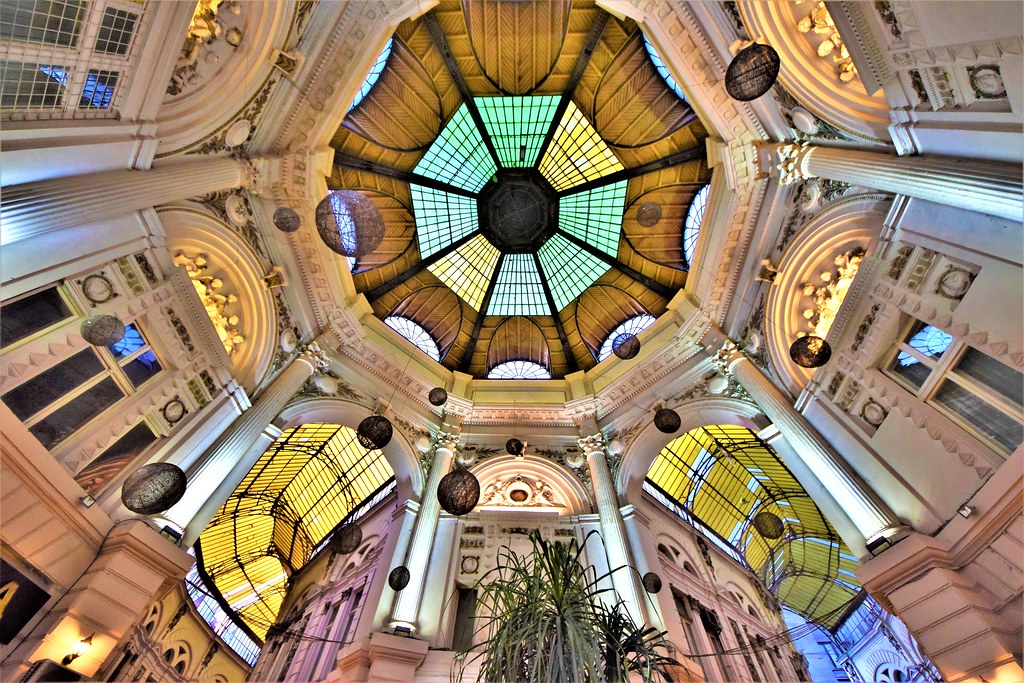
The Macca-Vilacrosse Passage is a fork-shaped, yellow-glass arcade in central Bucharest, often called the “Little Paris of Bucharest” for its echo of Paris’s covered streets. Use this page to decide whether it earns a stop on a walk through the city centre.
Cafes and bars line the arcade under the glass roof. The passage works best in the warmer months, when the tables are out and you can sit with a cup of tea or a plate of local cuisine.
Reviews from travellers are mixed. Some note missing panels in the glass roof and debris caught in the netting below; others compare it to the streets of Paris and call it worth the visit. Expect a worn version of the postcard, and go when the weather makes the roof matter less.
Key Takeaways
- A fork-shaped, yellow-glass arcade in central Bucharest, built in 1891 on the site of the Câmpineanu Inn.
- Cafes and bars line the arcade under the glass roof, at their best in the warmer months.
- Reviews from travellers are mixed: some note missing roof panels and debris, others compare it to Paris.
- Nearby stops include the Pura Vida Sky Bar, the Carturesti bookstores, and the umbrella street at Pasajul Victoria.
Where the passage came from
Built in 1891, the Macca-Vilacrosse Passage stands on the site of the Câmpineanu Inn. Walking through it, you pass under a glass ceiling and the original ironwork. Pasajul Macca-Vilacrosse once hosted the first Stock Exchange House of Bucharest. The passage later drifted toward abandonment before restoration brought it back into use.
The Câmpineanu Inn, established in 1833, began as a lodging house for travellers passing through Bucharest. The Câmpineanu family later bought it and turned it into a cultural hub that drew intellectuals, musicians, and artists. The Macca-Vilacrosse Passage was built as an extension of the inn and became a shopping arcade.
The passage later declined and was nearly forgotten. In 2007, however, the city of Bucharest began a restoration project that preserved the architectural heritage while adding modern amenities. Today the arcade is back in use, with cafes and bars under the restored glass roof.
Plan the practical bits
Plan your Bucharest visit
Some links below are affiliate links. If you book through one, Travel Romania may earn a commission at no extra cost to you.
What changed between 1891 and 2007
- Built in 1891, Pasajul Macca-Vilacrosse stands on the site of the former Câmpineanu Inn
- The Câmpineanu Inn, established in 1833, was a lodging house for travellers passing through Bucharest
- The Câmpineanu family later turned the inn into a cultural hub for intellectuals, musicians, and artists
- The Macca-Vilacrosse Passage was built as an extension of the inn and became a shopping arcade
- Over time the passage declined and was nearly forgotten
- In 2007, the city of Bucharest began a restoration project to revive the site
- The work preserved the architectural heritage while adding modern amenities
- Today the arcade is back in use, with cafes and bars under the restored glass roof
Where to eat and drink in the passage
The main reason to stop is the row of cafes and bars under the glass roof. They make the passage a place to sit with a cup of tea or a plate of local cuisine, and most visitors recommend the warmer months, when the tables are in use.
Bistro La Bibliotheque serves a French-inspired menu at affordable prices, with décor that reads like a library. Mon Chéri offers pastries, cakes, and specialty coffees in a modern room that works for a mid-day break.
For Romanian food, La Mama serves traditional dishes such as stuffed cabbage and sarmale. Pescăruș, with a nautical theme, specializes in seafood.
What visitors say about the condition
Reviews from travellers split on the condition. Some were disappointed, noting missing panels in the glass roof and debris in the netting below. Others found it worth exploring, and visitors who came in the warmer seasons liked the atmosphere. A few compared it to the streets of Paris and pointed to its historical importance as the reason to go.
“The Macca-Vilacrosse Passage is a charming and historic street attraction that offers a unique experience in Bucharest. The yellow glass-covered passage is a must-visit for anyone interested in architecture and history. I visited during the summer months and the atmosphere was lively and buzzing with activity. It’s definitely one of the hidden gems of Bucharest worth exploring.”- Traveler from the United States
Others also liked the atmosphere, comparing it to the streets of Paris and pointing to the history.
“This passage is a hidden gem that transports you to a different era. Even though it’s not in the best condition, its charm and allure are undeniable. It’s a unique experience that I would recommend to anyone visiting Bucharest. And the fact that it’s often compared to Paris only adds to its appeal.”- Traveler from Spain
Other places worth a stop in Bucharest
Beyond the passage, a few central Bucharest stops are worth pairing with it. The Pura Vida Sky Bar sits up several flights of stairs and opens onto a wide panorama of the Old Town. It is best for a sunset drink.
Two bookstores stand out. Carturesti Carusel, in the Old Town, is a designed interior with a café on the top floor that serves homemade lemonade. Carturesti Verona is set in an old building with rooms of books and gifts sorted by genre, some with seating for reading.
Abandoned buildings and street art
For a different angle, Bucharest has abandoned buildings you can visit on guided tours. The 120-year-old Macca House and The Truth Newspaper Trust are two of them, each with its own architecture and history. Access is usually through guided tours, which is where the context comes from.
Bucharest’s street art scene is worth a look, though the city is not known for large-scale murals. The pieces are small and hidden gems scattered through the streets, and a tour with a local is the practical way to read the history and social involvement behind them.
The Macca House was a department store abandoned during the communist era; it still stands in the city centre and catches the eye of passersby. The Truth Newspaper Trust is a printing press in the historic district and points to Bucharest’s role in journalism. Guided tours are how you get inside and understand what the buildings were.
The street art scene works the same way: small, hidden gems that are easy to miss. A tour with a local street art enthusiast is the way to see the history and the social context behind them. The point is to look past the surface of the city, one piece at a time.
The umbrella street and the Bazar antiques market
Two more central stops sit close by. Pasajul Victoria is the umbrella street, hung with coloured umbrellas overhead. Bazar is an antiques market inside a semi-abandoned building, where you can browse stalls and look at the interior.
Pasajul Victoria runs from Calea Victoriei to Lipscani, with hundreds of coloured umbrellas forming a canopy overhead. The umbrellas change with the season, and the street is popular with photographers.
Bazar is an antiques and vintage market in an old central building. Stalls sell retro furniture, vintage clothing, and records, with vendors offering traditional Romanian snacks. The building itself is part of the reason to go.
What to expect from a stop here
Bucharest rewards a walk past its obvious stops, and the Macca-Vilacrosse Passage is one of them. A drink under the glass roof, a view from the Pura Vida Sky Bar, the Carturesti bookstores, and the abandoned-building tours each give a different slice of the city.
The passage sits in central Bucharest: a fork-shaped, yellow glass-covered arcade often called the “Little Paris of Bucharest” for its architectural resemblance to the streets of Paris.
Built in 1891, the Macca-Vilacrosse Passage stands on the site of the Câmpineanu Inn. Under the glass ceiling you can still read the original architecture, and the 2007 restoration brought the arcade back into use after a period of near-abandonment.
The cafes and bars under the roof are the main draw, best in the warmer months when the tables are out. La Mama and Pescăruș cover the Romanian side; Bistro La Bibliotheque and Mon Chéri cover the café side.
Reviews split on the condition. Some travellers were put off by missing roof panels and debris in the netting; others, especially those who came in warmer weather, called it worth the stop and compared it to Paris.
Nearby, the Pura Vida Sky Bar gives a rooftop view, the Carturesti bookstores give a place to browse, and the Macca House and The Truth Newspaper Trust open on guided tours. Other unique experiences include Pasajul Victoria, known as the umbrella street, and the antiquities market at Bazar.
Bucharest also holds the world’s largest corkscrew and pressing iron collection, curated by the Museum of Romanian Records.
None of these is a headline attraction on its own. Paired together on a central walk, they are the reason to give Bucharest more than a single day.
FAQ
Q: Is the Macca-Vilacrosse Passage an important historical site in Bucharest?
A: Yes, the Macca-Vilacrosse Passage is a significant historical site in Bucharest. It was built in 1891 and is a testament to the city’s rich history.
Q: What can visitors expect to see in the Macca-Vilacrosse Passage?
A: Visitors can expect to see a beautiful glass ceiling and unique architecture that transports them back in time.
Q: Are there cafes and bars in the Macca-Vilacrosse Passage?
A: Yes, the Macca-Vilacrosse Passage is lined with cafes and bars, offering a cozy and lively atmosphere for visitors to enjoy.
Q: What do reviews from travelers say about the Macca-Vilacrosse Passage?
A: Reviews from travelers vary, with some expressing disappointment with its current state, while others find it to be a hidden gem worth exploring. Many appreciate its unique charm and historical importance.
A: Other hidden gems in Bucharest include the Pura Vida Sky Bar, Carturesti Carusel, and Carturesti Verona bookstores, as well as the abandoned buildings of Macca House and The Truth Newspaper Trust.
Q: Are there any unique experiences in Bucharest?
A: Yes, Bucharest offers unique experiences such as exploring the street art scene, visiting Pasajul Victoria (the umbrella street), and browsing through the antiques at Bazar.
Q: Are there any other interesting collections in Bucharest?
A: Yes, Bucharest is home to the largest corkscrew collection and pressing iron collection in the world, curated by the Museum of Romanian Records.
Q: What makes Bucharest an enchanting destination?
A: Bucharest offers a variety of hidden gems, unique experiences, and a charming allure that rewards those who are willing to explore beyond its surface.