
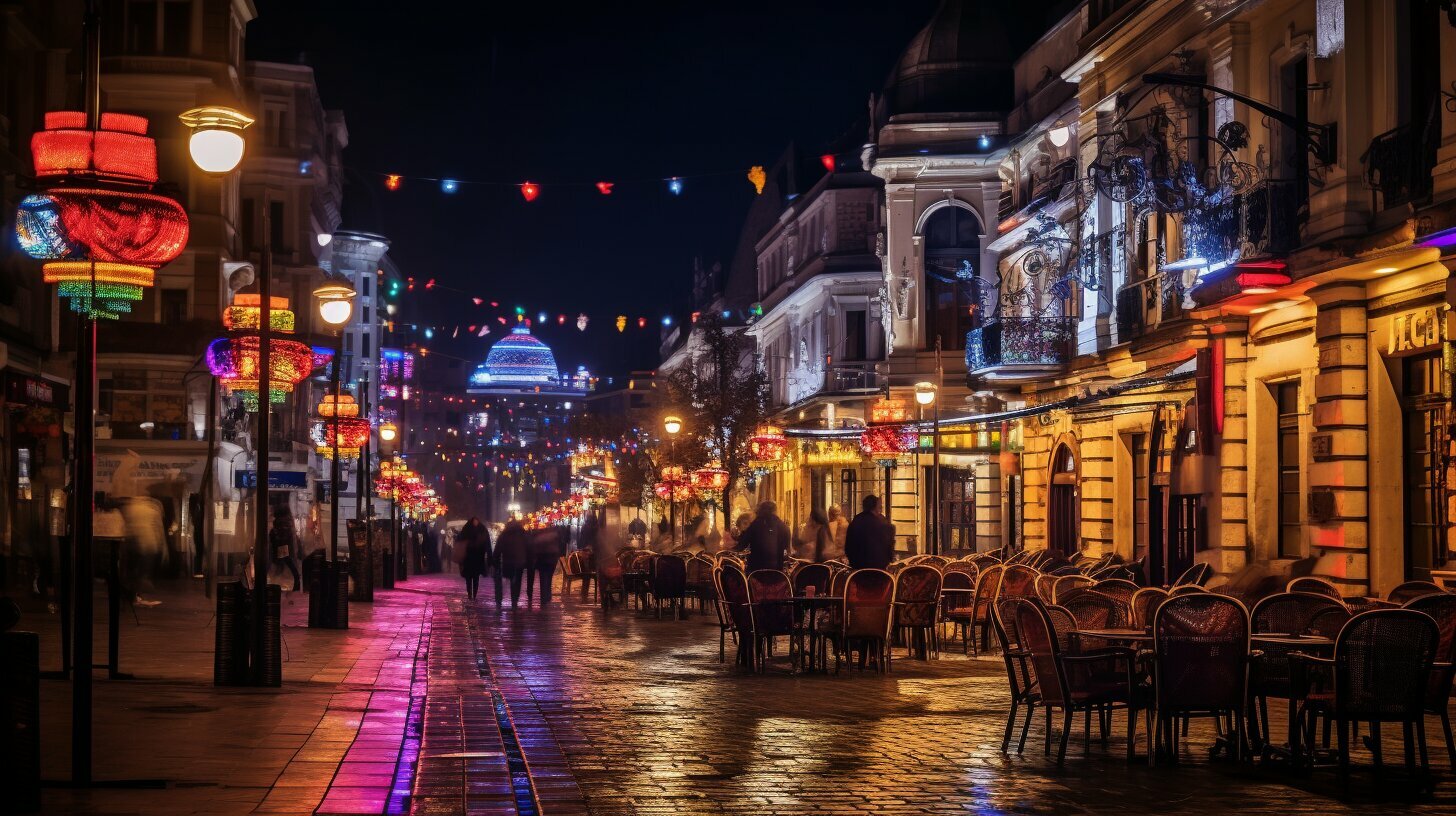
Bucharest’s Old Town, also known as Bucharest Old Town, is the historic core of Romania’s capital — a walkable grid of cobblestone streets and preserved buildings where most of the city’s sightseeing, dining, and nightlife concentrates. Use this page to plan a visit: what to see, where to eat, and what to expect once the bars open.
Key Takeaways:
- The architectural stops worth a circle: Stavropoleos Church, Hanul cu Tei, and the rest of Old Town Bucharest's restored inns and facades.
- The history sits in museums and on the street, including the National Museum of Romanian History and the Princely Court.
- Culture runs from the Romanian Kitsch Museum to the small art galleries scattered through the area.
- Eat in Old Town Bucharest at places like Caru’ cu Bere, which still serves traditional Romanian dishes in a 19th-century hall.
- The nightlife is concentrated here: bars, clubs, and live music venues open late and get busy in the evening.
Architecture in the Old Town
The draw of Old Town Bucharest is its architecture, packed into a few cobblestone streets. The styles mix medieval, neoclassical, and Art Nouveau, often on the same block.
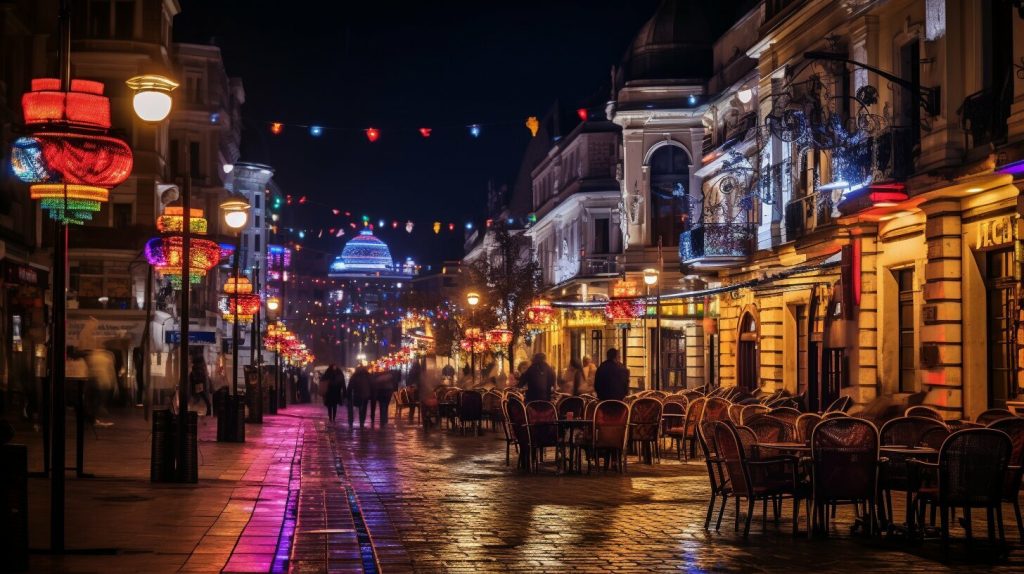
The standout is Stavropoleos Church, a 300-year-old Orthodox church with intricate stone carvings and frescoes, and a quiet courtyard a few steps from the bars.
| Architectural Gems | Highlights |
|---|---|
| Hanul cu Tei | A well-preserved historic inn known for its charming courtyard and traditional Romanian cuisine. |
| Hanul lui Manuc | One of the oldest surviving inns in Bucharest, featuring stunning architecture and atmospheric spaces. |
| Carturesti Carusel | A bookstore housed in a grand 19th-century building, offering a unique shopping experience amidst beautiful architecture. |
These three are the headline stops; the rest of the Old Town keeps turning up restored facades and courtyards as you walk.
Preserving the heritage
The historic buildings here have been restored in waves, which is why so many facades and courtyards are walkable rather than fenced off. The restoration work is what keeps the area legible as a single district.
“Old Town Bucharest is a treasure trove of architectural masterpieces, each with its own unique story to tell. The blend of styles and the meticulous attention to detail make this area a delight for architecture enthusiasts and history buffs alike.” – John Smith, Architecture Expert
The facades, the courtyards, and a coffee in a 19th-century inn are the slow way to read the Old Town. It works as a half-day walk on its own.
History of the Old Town
Start the history at the National Museum of Romanian History, then walk to landmarks that date back to the 18th century and beyond. The museum holds the artifacts, artworks, and documents that trace Romania from its early origins to the present.
On the street you’ll hit remnants of the city’s early history, including the Princely Court, the residence of Vlad the Impaler, also known as Dracula. It’s a medieval landmark rather than a reconstructed one, so read it as ruins.
During the communist era, Bucharest was heavily reshaped, and the Old Town sits next to the result: the Palace of the Parliament, completed in 1997 and the world’s heaviest and most expensive administrative building. It’s the clearest physical reminder of Romania’s communist period.
Historical sites
The historical sites within walking distance of each other:
- Princely Court: The residence of Vlad the Impaler, read as ruins, with the history and legends around him.
- Stavropoleos Church: An 18th-century Orthodox church with frescoes and an ornate wooden entrance.
- National Museum of Romanian History: Romania’s past in artifacts and documents, the place to start the historical walk.
- Palace of the Parliament: The communist-era landmark, best seen on a guided tour of its halls and chambers.
Ruins, medieval churches, and communist-era landmarks sit within a short walk of each other, which is the practical case for doing the history in one morning.
| Attraction | Opening Hours | Admission |
|---|---|---|
| Stavropoleos Church | Daily: 9:00 AM – 6:00 PM | Free |
| National Museum of Romanian History | Wednesday-Sunday: 9:00 AM – 5:00 PM | Adults: $5, Students: $2.50 |
| Palace of the Parliament | Tours available daily | Adults: $10, Students: $5 |
Culture in the Old Town
The cultural stops start with the Romanian Kitsch Museum, a small, playful look at the kitschy side of traditional Romanian taste — souvenirs, eccentric artwork, and the bold design that makes Romanian kitsch its own thing. The Romanian Kitsch Museum is short, so pair it with the galleries nearby.
The area’s galleries mix contemporary and traditional Romanian art, and most are small enough to walk through in 20 minutes. Expect a range from abstract painting to folk art, and a chance to see local artists who show mainly in Bucharest.
The easiest way into the culture is the food: sarmale (stuffed cabbage rolls), mămăligă (polenta), and cozonac (sweet bread) turn up on most Old Town menus. Some restaurants add folk music or traditional dance in the evening, which is as close as a short visit gets to local custom.
| Attractions | Cultural Experiences | Dining |
|---|---|---|
| Romanian Kitsch Museum | Exploring local art galleries | Traditional Romanian restaurants |
| Stavropoleos Church | Immersing in traditional customs | Local cuisine |
| Hanul cu Tei | Warm hospitality |
Where to eat
The two headline restaurants are Caru’ cu Bere and Hanul lui Manuc, both serving traditional Romanian dishes for decades. They are the safest first stop if you want the food and the setting together.
Caru’ cu Bere sits in a preserved 19th-century building and runs classic Romanian recipes — sarmale (cabbage rolls), mici (grilled minced meat rolls), and ciorba de burta (tripe soup). Order a local wine or a draft beer with it; the room is the reason to stay.
Hanul lui Manuc works around a courtyard with rustic interiors and a similar menu — mamaliga (polenta), mici, and papanasi (cheese doughnuts). Live music some evenings rounds it out.
Notable restaurants
- Caru’ cu Bere – A historic restaurant serving Romanian cuisine in a preserved 19th-century building.
- Hanul lui Manuc – A courtyard eatery with traditional dishes and live music on some evenings.
Beyond the two headline places, the side streets hold smaller kitchens worth a stop. Pick by the menu on the door and the crowd inside, not by the location alone.
| Restaurant | Specialties |
|---|---|
| Caru’ cu Bere | Sarmale, Mici, Ciorba de Burta |
| Hanul lui Manuc | Mamaliga, Mici, Papanasi |
Nightlife and entertainment
After dark the Old Town fills up: cocktail lounges, nightclubs, and live music rooms sit on the same few streets, so you can walk between them in a few minutes.
| Venue | Description |
|---|---|
| Private Hell Club | A hidden gem in Old Town Bucharest, the Private Hell Club is known for its intimate atmosphere and eclectic music selection. With its stylish interior and attentive service, it’s the perfect spot for a night of dancing and mingling with the city’s trendsetters. |
| Beluga Music & Cocktails | If you appreciate expertly crafted drinks and live music, Beluga Music & Cocktails is the place to be. This elegant venue offers a wide range of cocktails, from classic favorites to unique creations, accompanied by live performances from local bands and DJs. |
| The Vintage Pub | For a laid-back evening with good friends and great beer, head to The Vintage Pub. Known for its extensive beer selection and cozy atmosphere, this pub is a favorite among locals and tourists alike. Enjoy a pint of craft beer while listening to live music or challenging your friends to a game of darts. |
Old Town’s nightlife spills onto the street — impromptu performances and busy outdoor terraces — which is why the area stays loud late. Plan to walk, not drive, on a night out here.
Cocktail bar, nightclub, or pub — the Old Town has all three within a block. Read more on the nightlife guide to Bucharest before you pick one.
Walking the Old Town
The Old Town is best done on foot, with Lipscani Street and University Square as the two reference points. The area is pedestrian-friendly, so a slow walk is the whole point.
Walk Lipscani Street for the old architecture, the boutiques, and the cafes. If you want wider context, the Bucharest guide covers the rest of the capital. Stop at Stavropoleos Church for its 300-year-old architecture and courtyard, pass Hanul cu Tei and Hanul lui Manuc, and end at Carturesti Carusel, a bookstore in a 19th-century building.
The Old Town is more than architecture. The National Museum of Romanian History covers the country’s past, the Romanian Kitsch Museum covers the quirky end of it, and the galleries are where you see the art of Romania up close.
Food and night follow the walk. Caru’ cu Bere and Hanul lui Manuc cover the traditional end; the bars take over after dark — a drink at Private Hell Club, dancing at Beluga Music & Cocktails, or a pint at The Vintage Pub.
Walking is what makes the Old Town work: architecture, history, food, and bars all sit within a short loop. Put on comfortable shoes and do it in one pass.
Day Trips from Old Town Bucharest
With extra time, day-trip out to the Palace of the Parliament, Calea Victoriei, and Piata Unirii. The Palace, also called the People’s House, is the world’s heaviest building and a symbol of Romania’s Communist regime; guided tours cover its history. Calea Victoriei is one of Bucharest’s oldest avenues, lined with buildings, shops, and cafes, and works as a slow walk. Piata Unirii is the central square with a large fountain and a clear view of the Palace.
For green space, Herastrau Park is a half-day trip: walking paths around Herastrau Lake, bike rentals, and boat rides. Mogosoaia Palace, just outside the city, is the other easy option — a Brancovenesc-style palace with gardens and guided tours of its history.
Day Trips from Old Town Bucharest
- Palace of the Parliament
- Calea Victoriei
- Piata Unirii
- Herastrau Park
- Mogosoaia Palace
| Attraction | Description |
|---|---|
| Palace of the Parliament | The world’s heaviest building, symbolizing Romania’s Communist regime. Guided tours available. |
| Calea Victoriei | One of Bucharest’s oldest and most picturesque avenues, lined with impressive buildings, shops, and cafes. |
| Piata Unirii | A central square with a large fountain and a stunning view of the Palace of the Parliament. |
| Herastrau Park | An expansive park surrounding Herastrau Lake, offering walking paths, bike rentals, and boat rides. |
| Mogosoaia Palace | A beautiful palace showcasing Romanian Brancovenesc architecture, surrounded by gardens. |
“A visit to the Palace of the Parliament is a must for history enthusiasts, offering a glimpse into Romania’s complex past. Calea Victoriei is the perfect place to immerse yourself in the city’s charm, with its stunning architecture and vibrant atmosphere. And Piata Unirii is a true gem, providing a picturesque view of the iconic Palace of the Parliament,” says John Smith, a travel enthusiast.
The Old Town works as a base for these day trips because most start within a short metro or taxi ride. The Palace, Calea Victoriei, and Piata Unirii are the three that need the least planning; Herastrau and Mogosoaia take half a day each, so count them as day trips of their own.
Where to stay
For a stay in Bucharest, the Old Town and the blocks around it cover most budgets, from five-star hotels to small guesthouses. Staying inside the Old Town puts the sights and bars on your doorstep; staying just outside trades that for quiet at night.
The high-end hotels in the Old Town put you inside the historic core, with rooms, spas, rooftop terraces, and restaurants in the same building. The trade-off is price and street noise on lower floors.
Guesthouses and boutique hotels in the area cost less and often sit in historic buildings themselves. The rooms are smaller, the service is more personal, and the location is the same.
Location is the real choice here. Inside the Old Town, the sights, restaurants, and nightlife are all walkable. Just outside, the streets are quieter at night and you still reach the core in ten minutes.
Whichever side you pick, the Old Town keeps you close to the city’s history and its busiest streets. The difference is mostly about how quiet you want the room at night.
Practical information
The practical bits for a visit: how to get around, what the weather does, and when a guided tour earns its cost.
Transportation: The Old Town is pedestrian-friendly, so you’ll mostly walk. Taxis and public buses cover the edges. The National Bank of Romania sits in the middle of the area and works as a navigation landmark.
Weather: Check the forecast before you go. Bucharest has a continental climate — hot summers, cold winters — so pack for the season and add an umbrella or raincoat for a rainy day.
Guided tours: A guide helps if you want the history and architecture explained rather than read off a phone. Choose a bike tour or a fuller city tour; both usually stop at Lipscani Street and University Square, which is a quick way to orient yourself in Bucharest city.
| Affordable Transportation Options | Recommended Guided Tours |
|---|---|
| Taxis and Public Buses | Bike Tours City Tours |
| Important Landmarks | |
| National Bank of Romania Lipscani Street University Square | |
A short walk through the Old Town
The Old Town packs historical landmarks, restored inns, and traces of the communist past into a few cobblestone streets. Stavropoleos Church, with its 300-year-old architecture and quiet courtyard, is the one to prioritise. Hanul cu Tei and Hanul lui Manuc, two preserved inns, are the place to stop for a meal or a drink.
The Carturesti Carusel bookstore, in a 19th-century building, is the other don’t-miss stop — grand interiors and a large book collection over several floors. The streets around it hold most of the dining options, from traditional Romanian to international, and Caru’ cu Bere and Hanul lui Manuc pair the food with a historic room.
After dark, the bars take over: Private Hell Club and Beluga Music & Cocktails for cocktails and music, The Vintage Pub for a slower pint. For the cultural side, the National Museum of Romanian History and the Romanian Kitsch Museum cover the city’s past and its playful art.
History, culture, food, and bars sit inside the same few streets, which is the case for doing the Old Town in a single concentrated visit rather than spreading it out.
Conclusion
Bucharest’s Old Town is the part of the city where history, architecture, nightlife, and culture overlap on the same streets.
The narrow cobblestone streets and the restored buildings are the core of a visit. Stavropoleos Church, Hanul cu Tei, Hanul lui Manuc, and Carturesti Carusel are the four that show the city’s past most clearly.
The dining scene leans traditional Romanian, and Caru’ cu Bere and Hanul lui Manuc are the two restaurants most visitors gravitate to first.
After sunset the bars and clubs take over. Private Hell Club, Beluga Music & Cocktails, and The Vintage Pub are the usual stops for live music, cocktails, or a late pint.
For culture, the National Museum of Romanian History and the Romanian Kitsch Museum cover the country’s heritage and its playful art without taking a full day.
A walk, a meal, a night out, or a museum morning — the Old Town holds all of them, which is why it’s the part of Bucharest most travellers do first.
FAQ
Q: What can I do in Bucharest’s Old Town?
A: In Old Town Bucharest, you can explore historic buildings, visit museums, dine at popular restaurants, enjoy the vibrant nightlife, and take walking tours to discover the area’s charm.
Q: What are some must-see attractions in Bucharest’s Old Town?
A: Some must-see attractions in Old Town Bucharest include the Stavropoleos Church, Hanul cu Tei, Hanul lui Manuc, and the Carturesti Carusel bookstore.
Q: Are there any museums to visit in Old Town Bucharest?
A: Yes, you can visit the National Museum of Romanian History and the Romanian Kitsch Museum to learn more about the city’s rich history and culture.
Q: What are some popular restaurants in Old Town Bucharest?
A: Caru’ cu Bere and Hanul lui Manuc are two popular restaurants in Old Town Bucharest where you can enjoy traditional Romanian cuisine.
Q: What nightlife and entertainment options are available in Old Town Bucharest?
A: Old Town Bucharest offers a vibrant nightlife scene with bars and clubs like Private Hell Club, Beluga Music & Cocktails, and The Vintage Pub.
Q: Can I explore Old Town Bucharest on foot?
A: Yes, Old Town Bucharest is best explored on foot, with popular walking tours available to discover landmarks such as Lipscani Street and University Square.
Q: Are there any day trip options from Old Town Bucharest?
A: Yes, you can take a day trip from Old Town Bucharest to visit attractions like the Palace of the Parliament, Calea Victoriei, and Piata Unirii.
Q: What are the accommodation options in Old Town Bucharest?
A: Old Town Bucharest offers a range of accommodation options, including hotels and guesthouses, where you can stay and immerse yourself in the area’s history and culture.
Q: Is there any practical information I should know before visiting Old Town Bucharest?
A: Before visiting Old Town Bucharest, it is useful to know about transportation options, weather conditions, guided tours, and landmarks like the National Bank of Romania.
Q: What makes Old Town Bucharest unique?
A: Old Town Bucharest is unique because it combines a rich history with a vibrant atmosphere, showcasing the city’s hidden gems, architectural wonders, and the influence of the Communist regime.